Program Description
The Neighborhood Improvement Grant is designed to improve and enhance the City’s neighborhoods by inviting eligible Associations to apply for a grant, in the maximum amount of $5,000, to fund a project located in the Association’s neighborhood. This year, Arts United is partnering with the Department of Neighborhoods to provide a matching grant to three (3) of the awarded Improvement Grant applicants exclusively for Public Art Projects, for a total available of $10k in funding for each.
 Thank you to our partner at Arts United for graciously supporting this year's program.
Thank you for applying for the 2026 Neighborhood Improvement Grant. To review your submitted application, click here to log in to your Submittable account.
2026 Improvement Grant Awardees
Mayor Sharon Tucker announced on April 13th, 2026, that 28 Fort Wayne neighborhoods are receiving improvement grants to help make them safer, more attractive, and more enjoyable for residents.
“I’m appreciative and supportive of the Neighborhood Improvement Grant program. We’re bringing residents together to enhance quality of life offerings and make a positive difference,” said Mayor Tucker. “With strong, engaged, and growing neighborhoods, we’re better equipped to get to where we want to go as a thriving city that’s moving in the right direction.”
“This is the ninth year of the Neighborhood Improvement Grant program, one of our most popular grant programs at the City,” said Director of Neighborhoods Dan Baisden. “We're excited to add to it this year by partnering with Arts United to include a few additional awards focused on bringing public art to our neighborhoods. It's partnerships like this that help us extend our grant resources further and make a bigger impact for our neighborhoods."
_____________________________________________________________________________________________________________________________
Brierwood Hills- $2850- repair of community entrance placard
Broad River- $5000- support for neighborhood micro-grant improvement program
Canyons of North Pointe Woods- $5000- native plant landscaping at entrances to community
Concordia Gardens- $5000- installation of upgraded playground equipment at community park
Crestwood- $4027- landscape around new entrance signs and message boards
Eastside- $5000- installation of benches, waste bins, and sidewalk flower planters at prominent intersection
Emerald Lake- $5000- reconstruction of community entrance sign
Fallen Timbers- $5000- reconstruction of community entrance sign
Hamilton- $5000- installation of 4 information boxes across neighborhood
Harvester- $500- planting flower bulbs along major thoroughfare
Historic Oakdale- $4800- restoration of historic entrance pillars throughout neighborhood
Indian Village- $5000- restoration of historic entrance sign
Lafayette Place- $4414- installation of 15 neighborhood identity signs
Lakes of Buckingham- $4363- add bench seating to community picnic area
Manor Park- $3510- installation of upgraded playground equipment at community park
Memorial Park- $4850- installation of new water fountain at Memorial Park
Michigan Ave- $2963- installation of 10 neighborhood identity signs
North Highlands- $10k (Public Arts special award)- artist painted crosswalks at entrance to Hamilton Park
Packard Area Planning Alliance- $10k (Public Arts special award)- installation of large artist designed mural celebrating community history
Renaissance Pointe- $5000- beautification though landscaping across neighborhood
The Association of Chandler's Landing- $2437- create a gardened picnic sitting area along community trail
The Knolls- $1500- installation of raised beds in community garden
Timberlake- $5000- replanting tree line along community pond
West Central- $10k (Public Arts special award)- installation of large artist designed mural at highly visible location
Winterset Square- $5000- installation of new community entrance markers
Woodhurst- $5000- installation of concrete trail connection to the River Greenway
Woodmark Condominiums- $3500- installation of solar lighting throughout community
Wyndemere Community- $5000- removal and replanting of trees at community entrance
Program Policy
An Association may elect to have the City pay the Association’s Grant award directly to contractors, vendors, and suppliers contracted to provide labor and/or materials for the Project. Alternatively, the Association may elect to be reimbursed by the City upon providing the City satisfactory evidence of proof of the Association’s payment to contractors, vendors, and suppliers for labor and/or materials to the Project.
Applications must include evidence of neighborhood engagement in the selection, implementation, and support for the Project. Neighborhood engagement shall be of such character and amount satisfactory to City.
Applications from Associations not previously awarded Program funding for a Project will be prioritized in order to expand the Program’s outreach. However, Associations which previously received Program funding for a Project are encouraged to submit Applications for new Projects.
Only Associations which are registered with the Department of Neighborhoods and whose neighborhoods are located entirely within the boundaries of the City of Fort Wayne are eligible to submit Applications.
All documents submitted by Association to City are subject to open records requests.
All professional planning, design, and consulting services for which funding is requested must be directly related to the Project. Payment of such professional services is limited in amount to 15% of a Grant Award.
Costs for food, entertainment, salaries, benefits, maintenance obligations, operating expenses, replacements of existing items (except to significantly enhance a Project), and overhead are not eligible Project costs.
Whenever possible, Projects should engage local contractors, vendors, and suppliers.
The purchase of movable assets for a Project must be used for the Project and directly impact the Project outcome. Any proposed purchase of moveable assets for a Project must include a detailed plan of the permanent storage and ownership following the Project’s completion. The purchase of such assets shall be reviewed on a case-by-case basis to determine eligibility.
Decisions made by City regarding the acceptance or rejection of an Application and the eligibility of Project are final and not subject to appeal.
Only completed Applications may be submitted. Incomplete Applications will be rejected. A point system for rating the Applications has been designed to identify and reward original, deliberative, comprehensive responses to each section of the Application. Associations are encouraged to become knowledgeable about the Application process by attending one (1) of the four (4) Program workshops or meeting with the Program Grant Administrator prior to submitting their Applications.
Each Section of the Application will be scored separately and the total score for each Application will be considered independently and in comparison, to the scoring of other Applications. Additionally, each Application will be reviewed to determine the extent to which a Project can achieve the following benchmarks:
- Project includes a comprehensive plan for significant neighborhood involvement in the selection and implementation of the Project.
- Residents will have the opportunity to participate, assume leadership roles, and/or develop new skills through the Project.
- Project will build neighborhood organizational capacity
- Project strengthens or builds new partnerships with public/private entities and community groups.
- Project generates letters of support, pledges of volunteer services, and/or other evidence of broad neighborhood support.
- Application clearly and specifically identifies issues to be addressed and resolved by implementation of the Project
- Application illustrates commitment to seek creative and workable neighborhood solutions
- Project will benefit a significant number of neighborhood residents
- Project improves health, safety, or quality of life for neighborhood residents, eliminates or reduces potential property damage or provides relevant neighborhood facilities.
- Project has a well-defined scope, timeline, goals, detailed phases, measurable outcomes and will be completed by Project Completion Date
- Required permits and approvals from applicable City departments and offices have or will been obtained prior to Project commencement
- Project has high level of visibility and impact and is accessible to all neighborhood residents
- Project has a realistic plan and budget for ongoing maintenance
- The contractors, vendors, and suppliers required for Project have been identified by Association
- Project has been approved by neighborhood residents (provide documentation)
- Project budget is well-planned and realistic
- Additional support exists for Project through cash and in-kind contributions from neighborhood residents, businesses, community groups and others.
- Project will be accomplished through a one-time expenditure. Multi-phased Projects have previously been approved with significant evidence that the new phase of the Project can be completed within a reasonable timeline. Ie. Installment of a pergola in 2026 with program funding followed by installation of a concrete patio under pergola in 2027 next year with Association funding.
- If a previous Improvement Grant by the City to the Association to fund an existing Project has been awarded, the new Project is unrelated to the existing Project.
Eligibility for Program funding requires that a Project fit within one (1) of the following categories: (1) Public Art Projects, (2) Community Living Improvement Projects, (3) Eco-Friendly Improvement Projects, or (4) Neighborhood Identity Projects. Routine or required maintenance projects are not eligible for Program Grant funding.
- Public Art Projects –include creative or artistic seating, lighting, signage, and landscaping; interactive, upcycled, musical, interpretive, and historical; murals, sculptures, and fountains.
- Community Living Improvement Projects– include playscapes, athletics/ physical activities spaces, alternative transportation access improvements, dog park/equipment, improved gathering spaces, benches/picnic tables/pergolas/pavilions, share shed/ lending library, safety/ lighting improvements, path and/or trail improvements, and curb appeal microgrants.
- Eco-Friendly Improvement Projects –include vacant lot adoption/clean up, community food gardens, pollinator gardens, heat reduction through tree planting, native plants, rain gardens, community hanging flower baskets or planters, waste/recycling receptacles, composting sites, community birdhouses, wildlife/native habitat restoration, shoreline restoration, light bulb replacement program, and little free plant library/ seed sharing/ community greenhouse.
- Neighborhood Identity Projects– include logo/branded signage, wayfinding signage, communication bulletins, historic district signage and plaques, historic landmark signage, neighborhood storytelling signage.
The award of a Program Grant requires the review, unconditional approval, and, if applicable, permitting of a Project by all municipal departments and divisions and private sector entities having jurisdiction over the Project. For example, a Public Art Project must be reviewed and approved by the Public Art Review Committee, a Project involving public right-of-way must be reviewed and approved by the Department of Public Works, and a transit-related project requires an agreement between the Association and Citilink.
Projects may not promote, advance, depict, or include any religious or political belief, practice, or affiliation or any derogatory reference. Projects may not promote discrimination based on race, creed, color, national origin, gender identification, sexual orientation, or disability.
Submission of current Bylaws and/or Covenants is required to assist in determining if a Project would constitute a maintenance obligation.
Program Grant recipients shall maintain timely and responsive communications with the Project Grant Admiinistrator. Failure to do so may result in recission of a Grant Award.
Applications shall include a description of how the Project will be maintained over an initial five-year term and identify both the funding source and the parties responsible for such maintenance.
Projects located on the property of a private property owner must obtain and submit written consent from the property owner and a five (5) year maintenance agreement signed by the property owner and the Association prior to the execution of the Grant Agreement.
Evidence of the Association’s site control for the Project must be submitted prior to the execution of the Grant Agreement.
Project Examples
- Community Living Improvement Projects– include playscapes, athletics/ physical activities spaces, alternative transportation access improvements, dog park/equipment, improved gathering spaces, benches/picnic tables/pergolas/pavilions, share shed/ lending library, safety/ lighting improvements, path and/or trail improvements, and curb appeal microgrants.
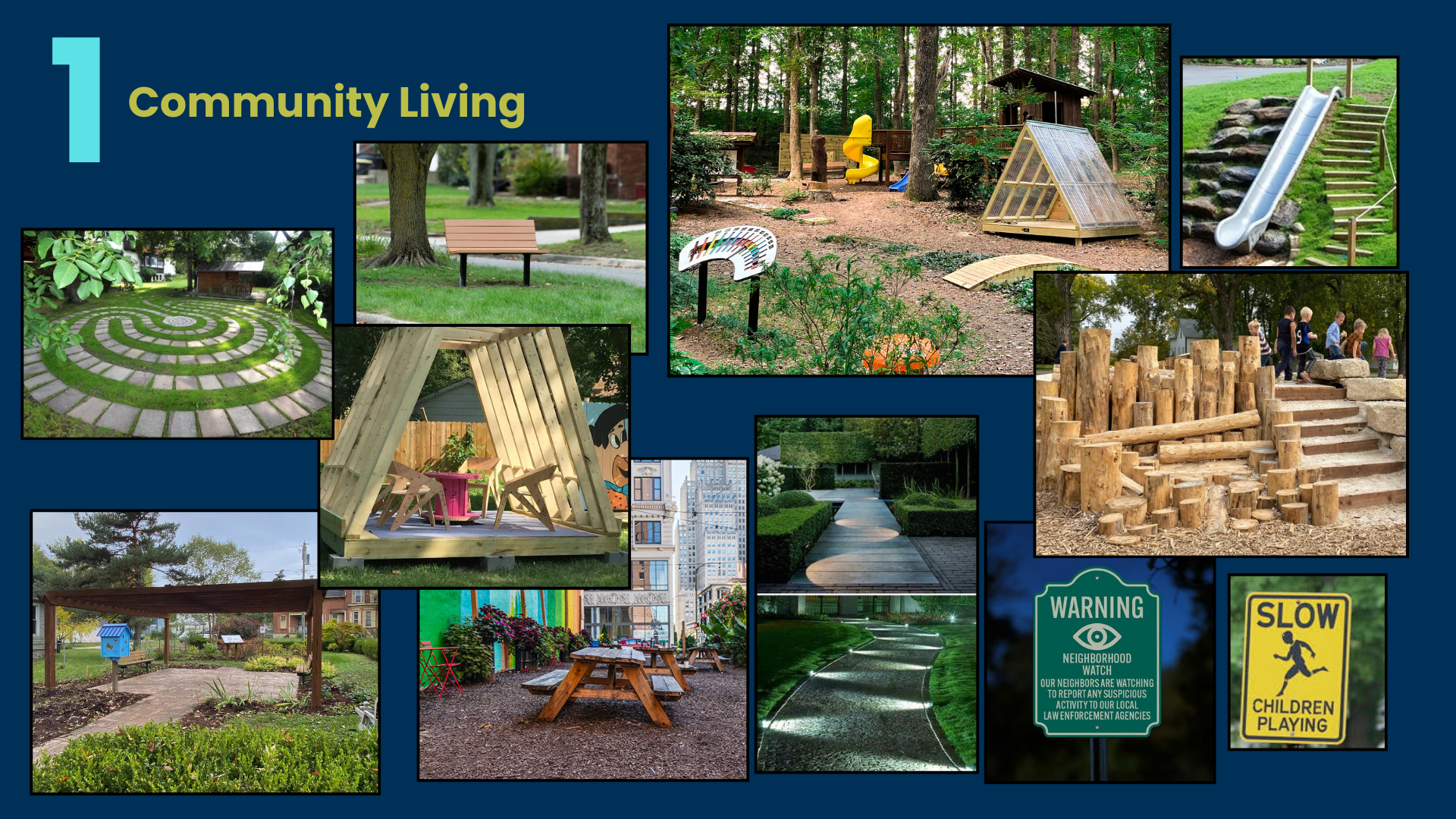
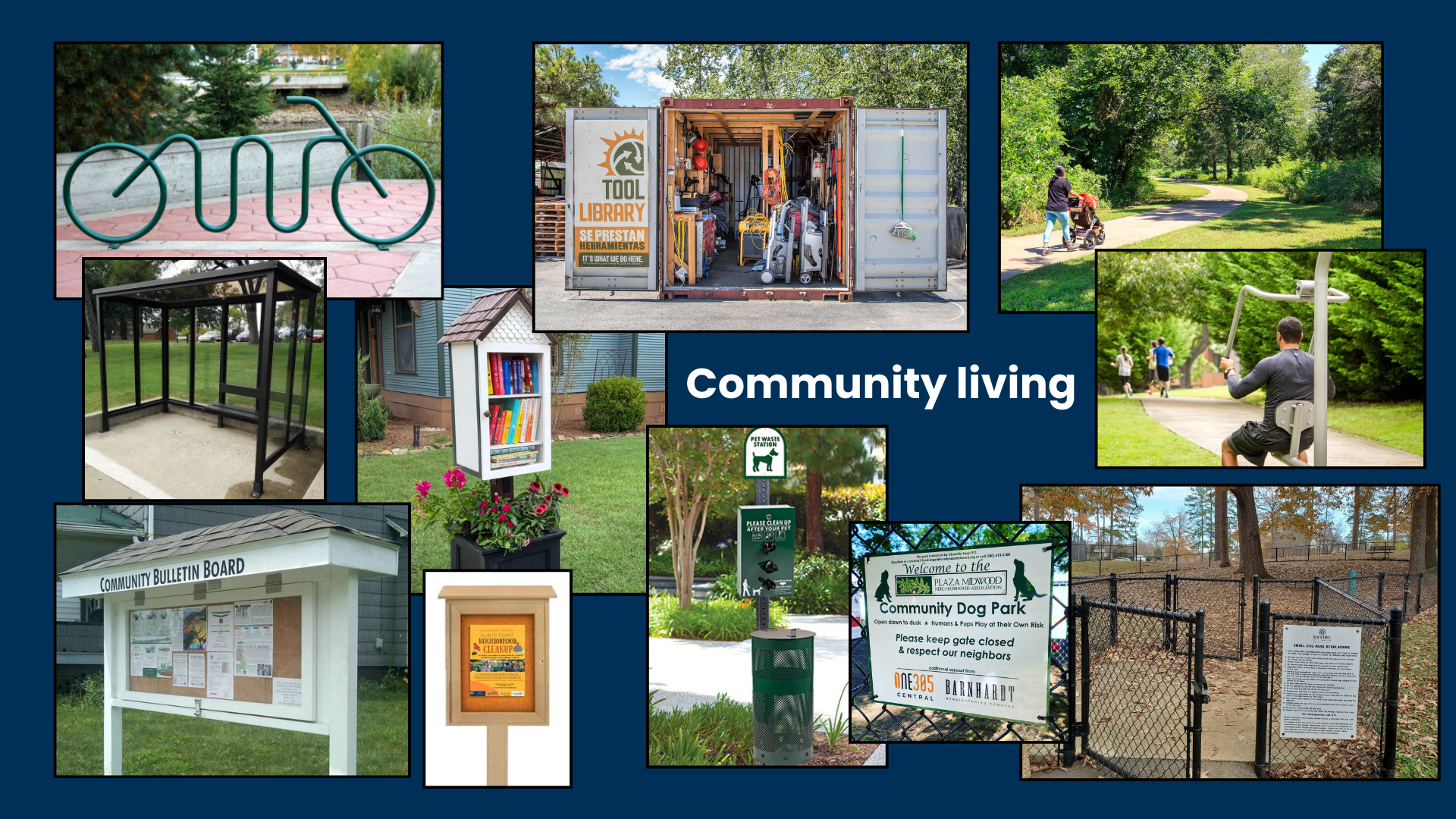
Examples of Community Living Improvement Projects
- Eco-Friendly Initiative Projects – vacant lot adoption/clean up, community food gardens, pollinator gardens, heat reduction through tree planting, native plants, rain gardens, community hanging flower baskets or planters, waste/recycling receptacles, composting sites, community birdhouses, wildlife/native habitat restoration, shoreline restoration, enhancement programs, and little free plant library/ seed sharing/ community greenhouse.
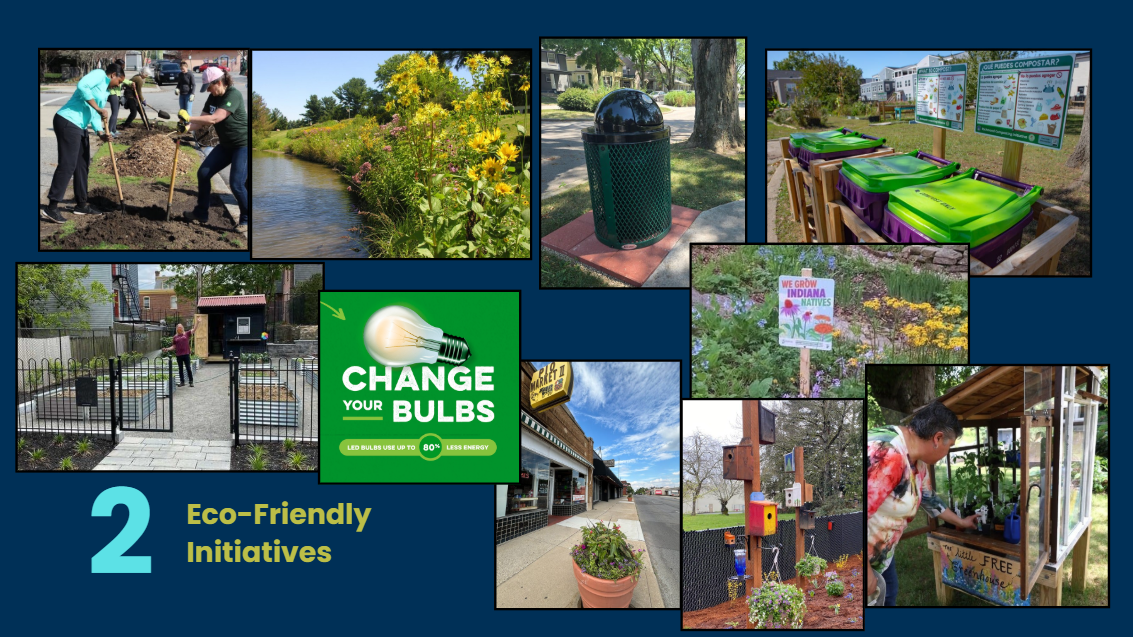
Eco-Friendly Initiative Project Examples
- Public Art Projects –include creative or artistic seating, lighting, signage, and landscaping; interactive, upcycled, musical, interpretive, and historical; murals, sculptures, and fountains.
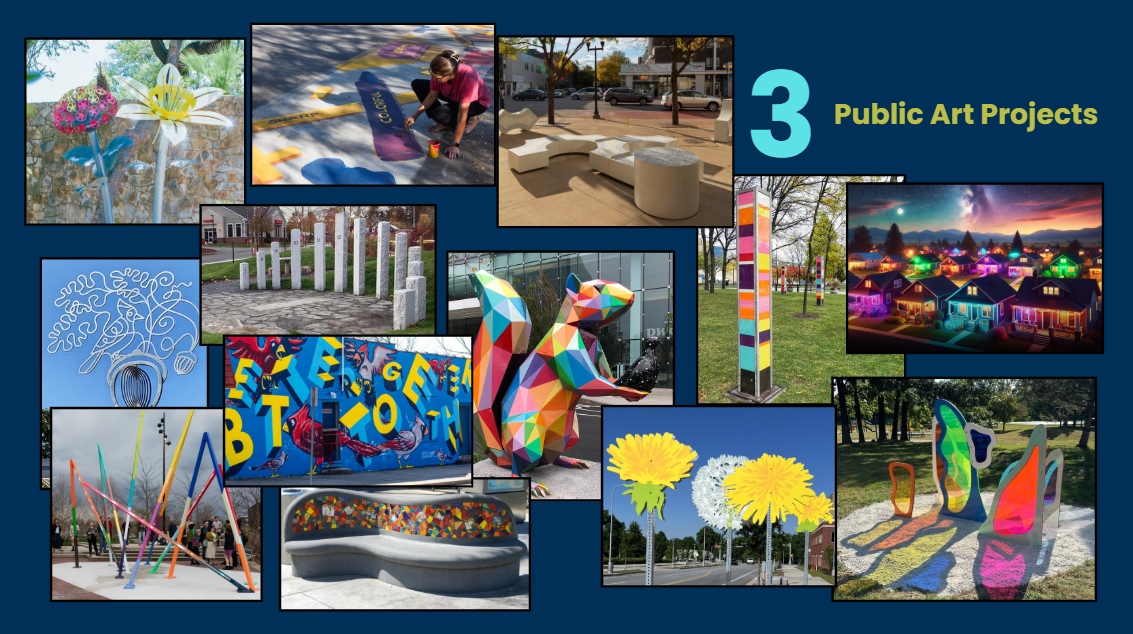 Public Art Project Examples
- Neighborhood Identity Projects– logo/branded signage, wayfinding signage, communication bulletins, historic district signage and plaques, historic landmark signage, neighborhood storytelling signage.
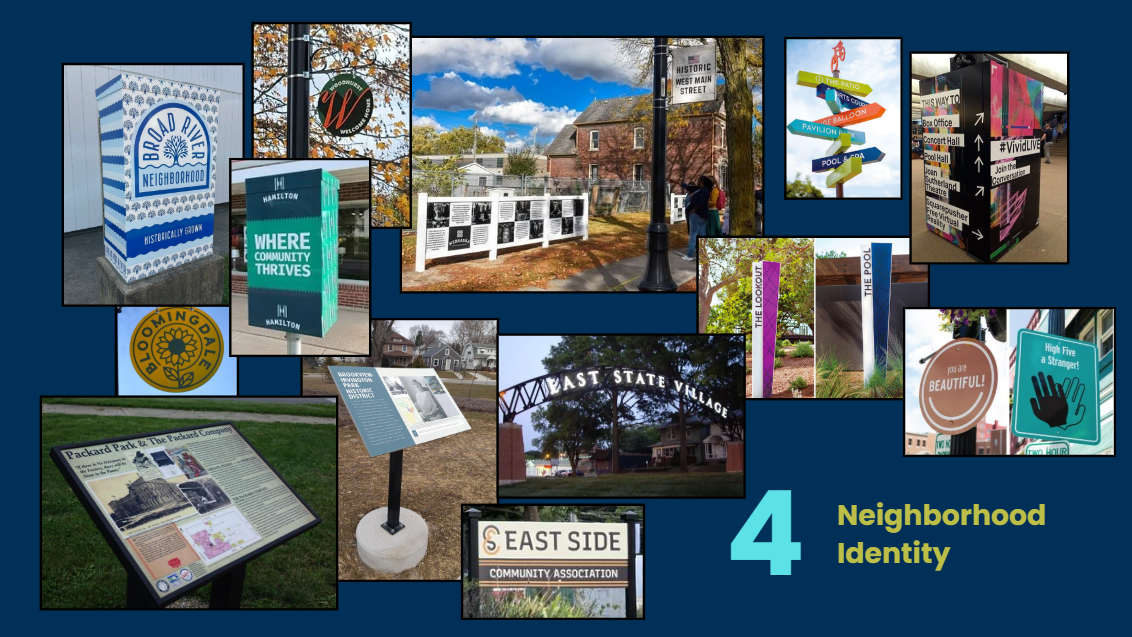
Neighborhood Identity Improvement Project Examples
2025 Previous Grant Winners
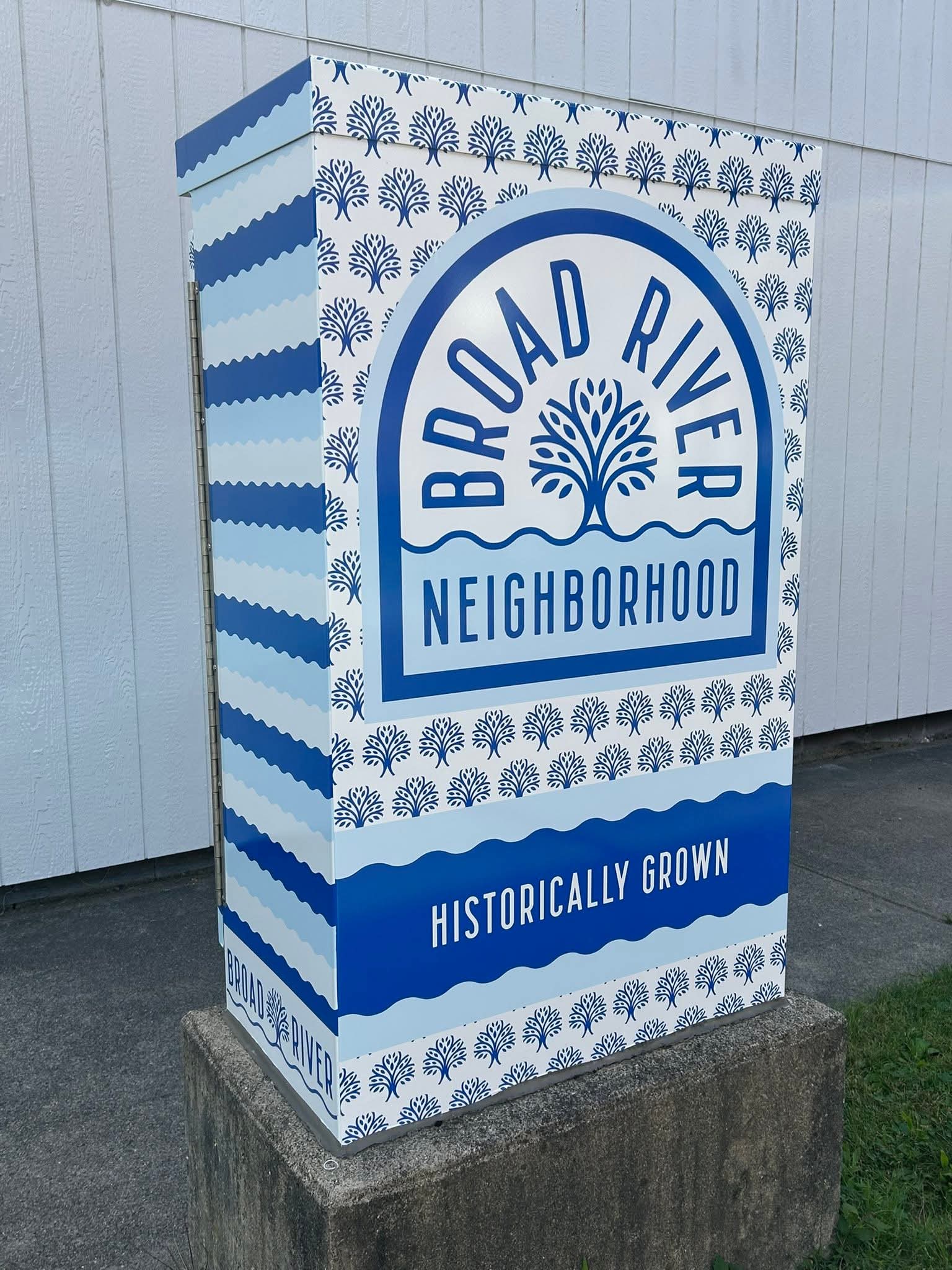 Broad River Neighborhood Identity Project - wrapped utility cabinet with neighborhood branding
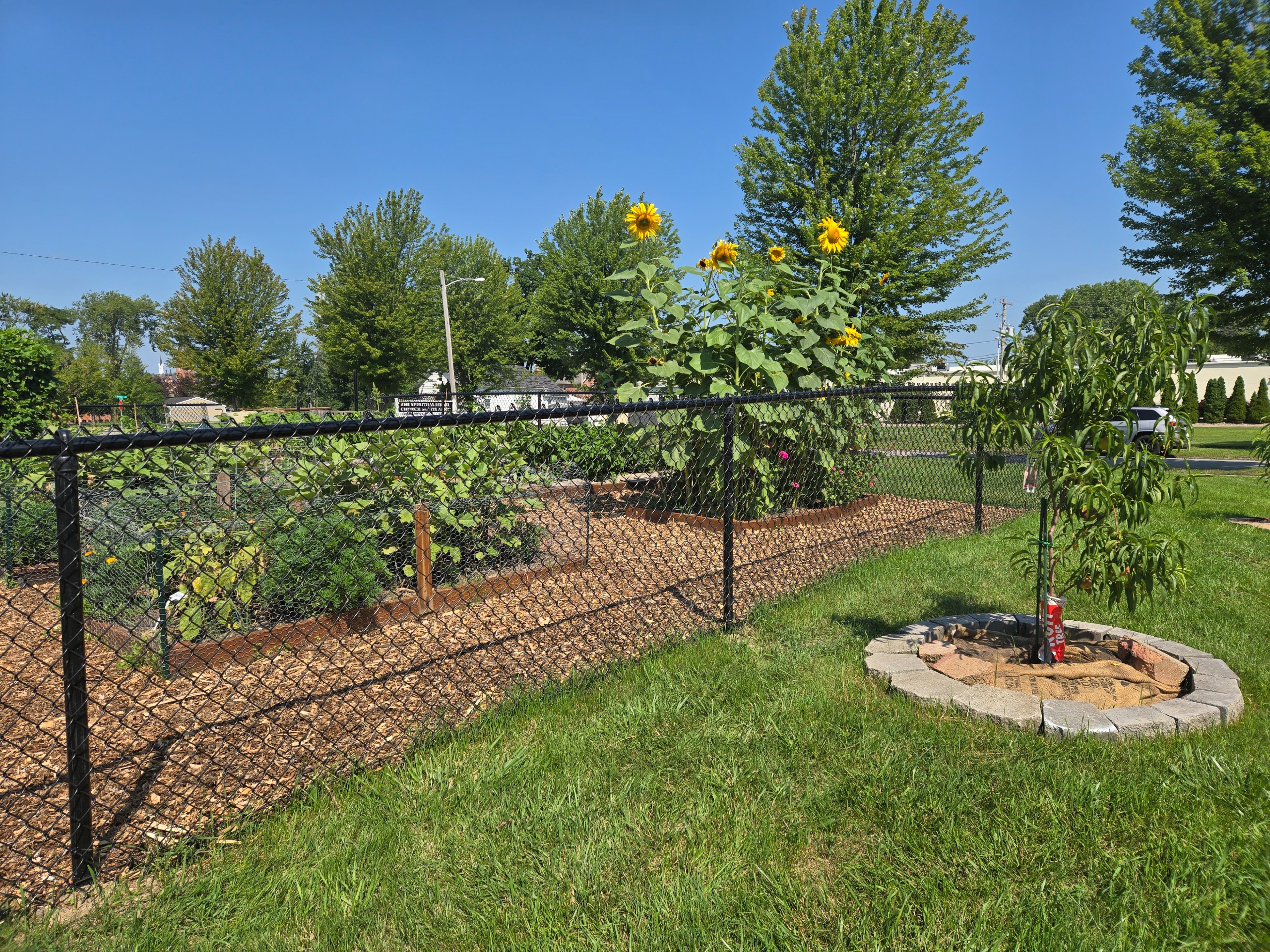 East Central Community Living Improvement - installed new fence surrounding community garden
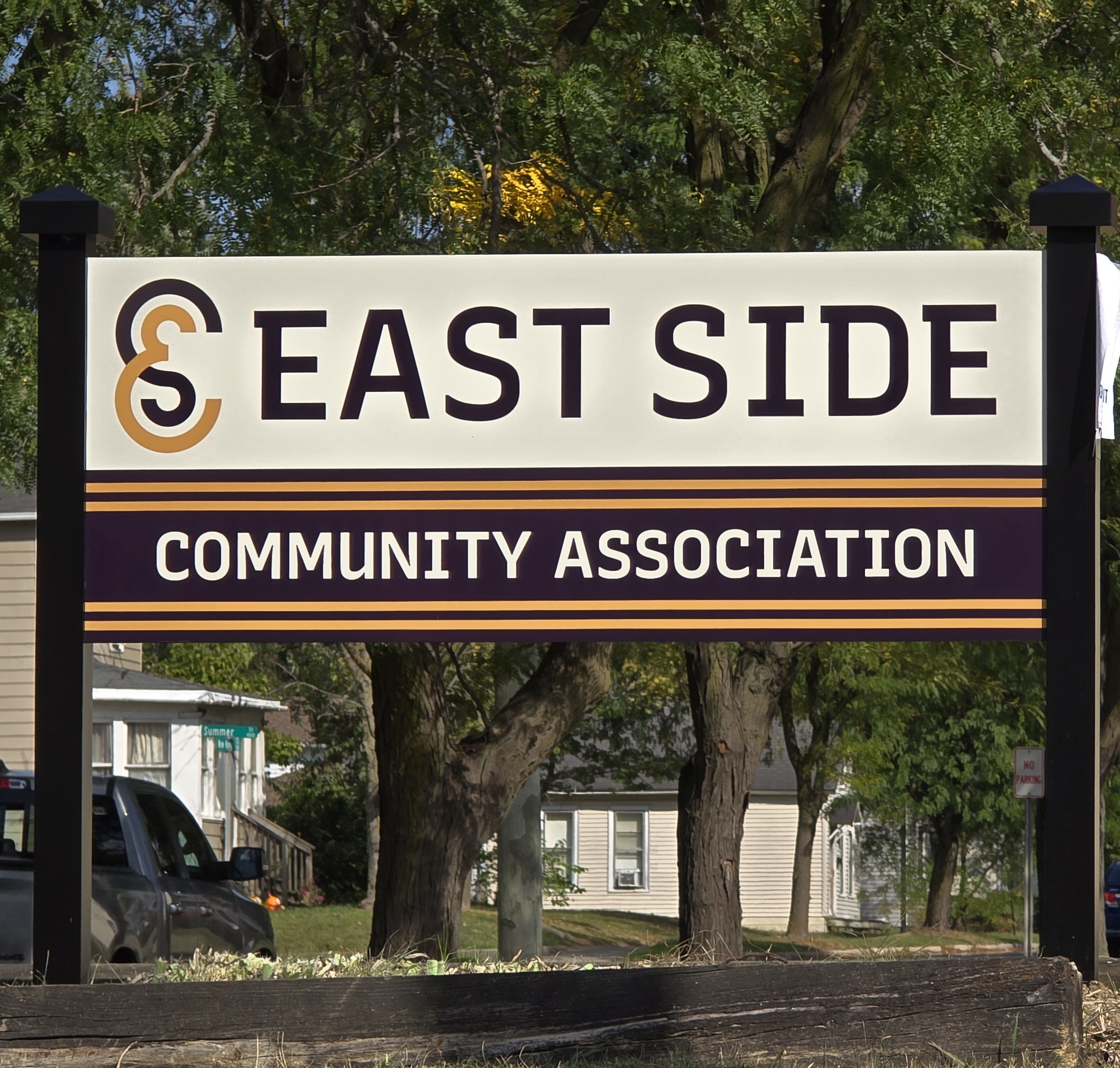
Eastside Neighborhood Identity Project - installed new entrance sign with neighborhood branding
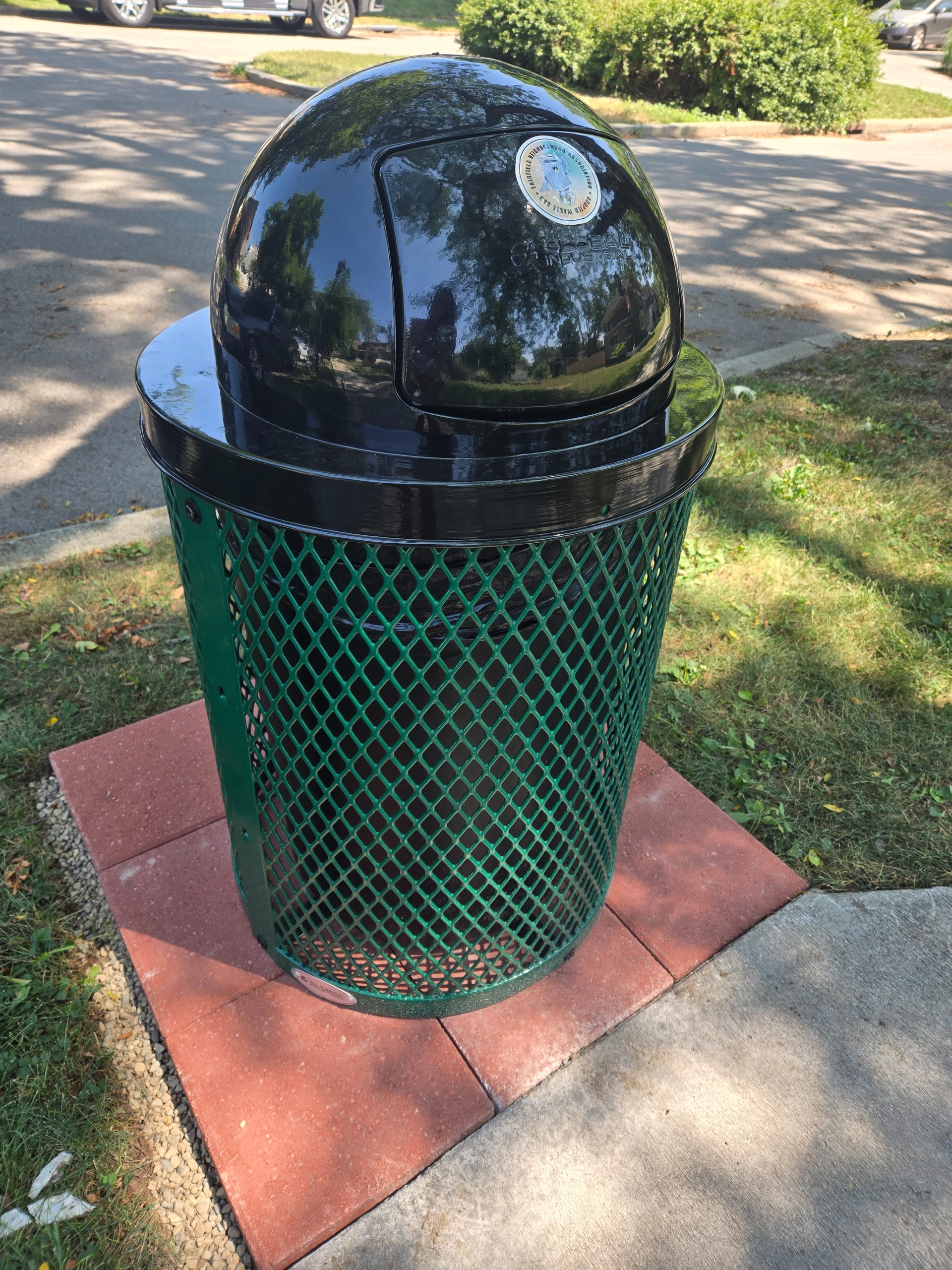 Fairfield Eco-Friendly Initiative Project - installed 9 waste bins and 5 dog waste stations throughout neighborhood
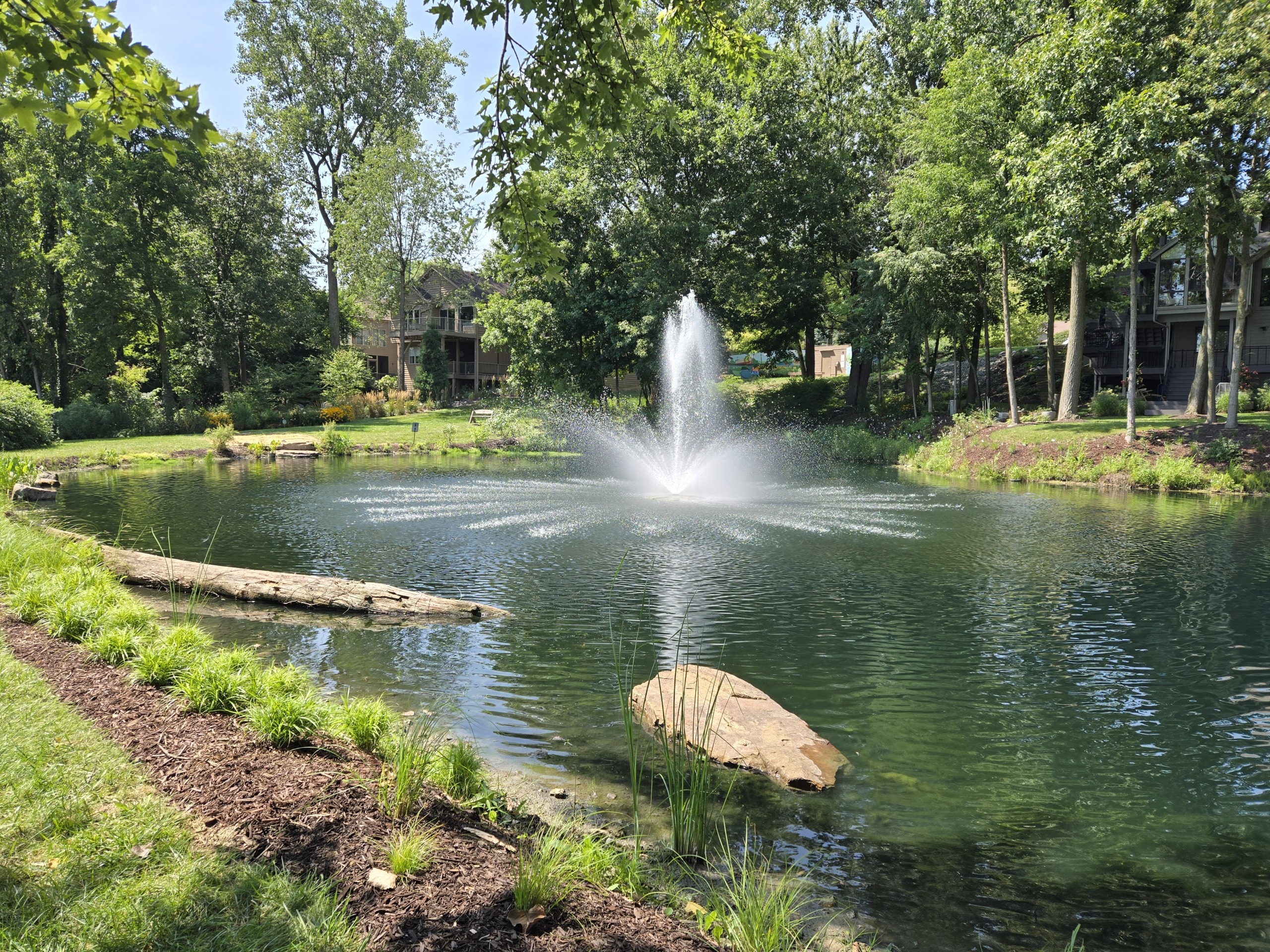 Hamlets West Eco-Friendly Initiative Project - habitat restoration of pond shoreline
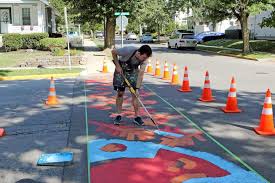
Historic Fairmont Public Art Project - artist painted crosswalks
 Historic South Wayne Public Art Project - artist painted crosswalks
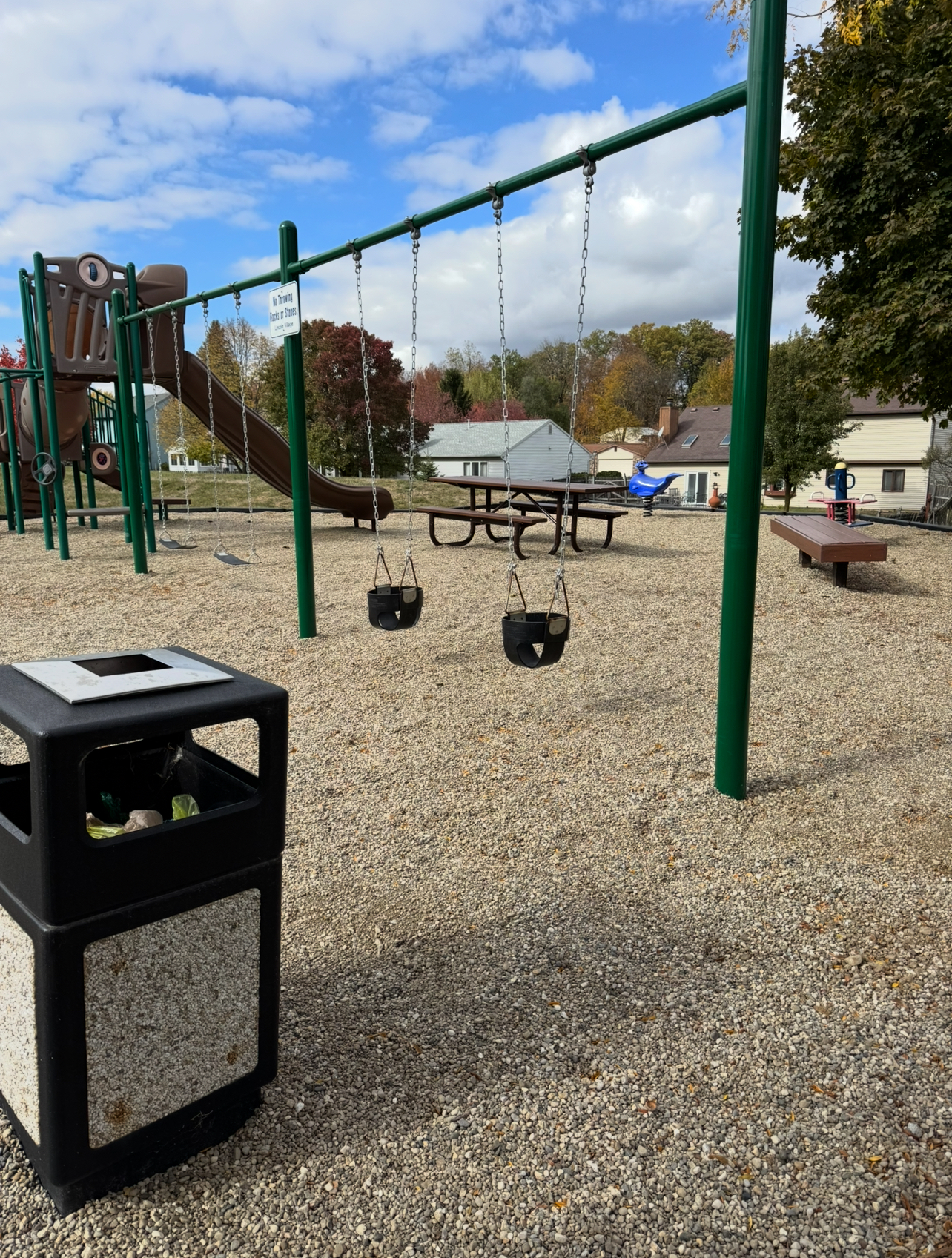 Lincoln Village Community Living Improvement Project - installed new swingsets at community playground
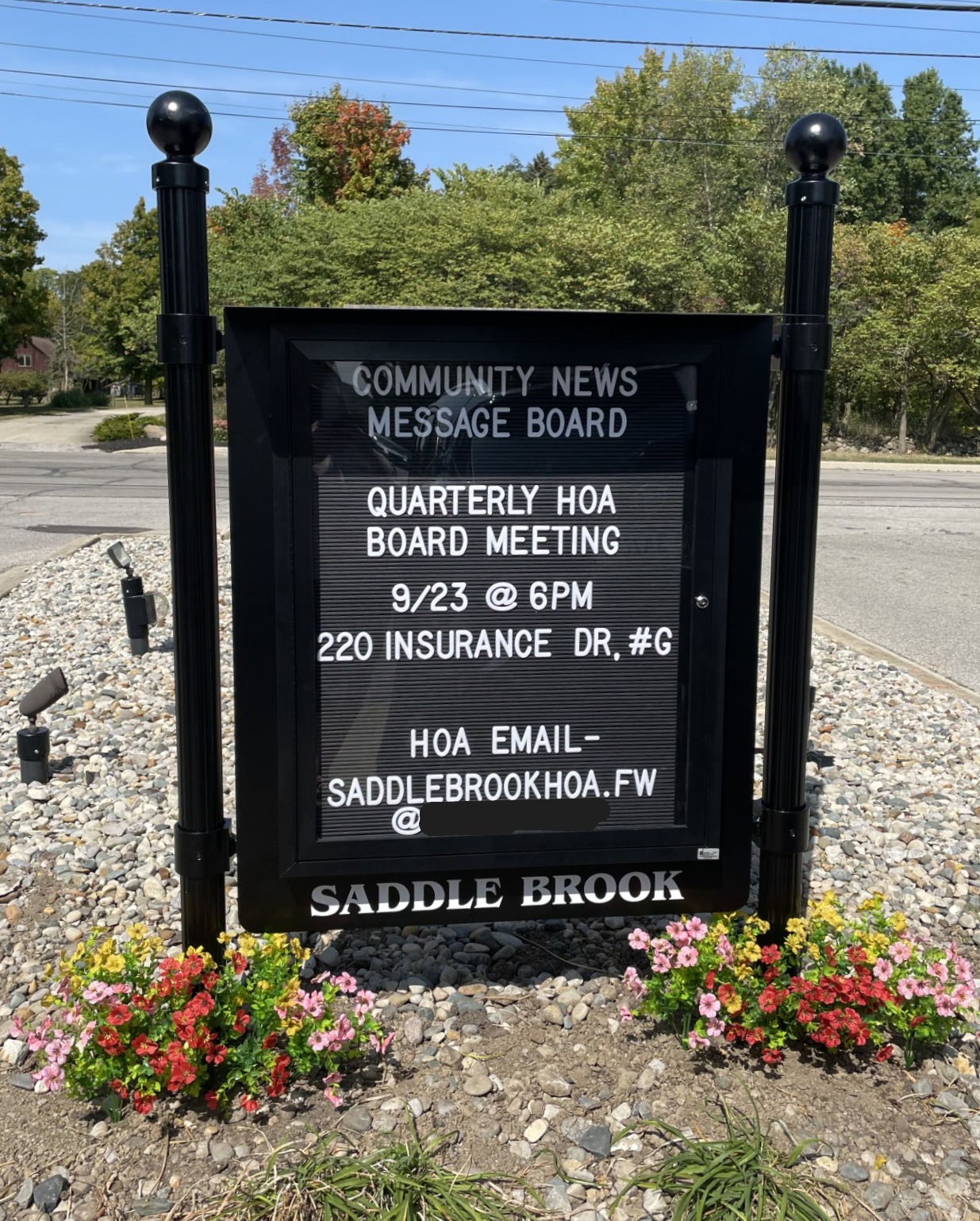 Saddle Brook Community Living Improvement Project - installed community message board
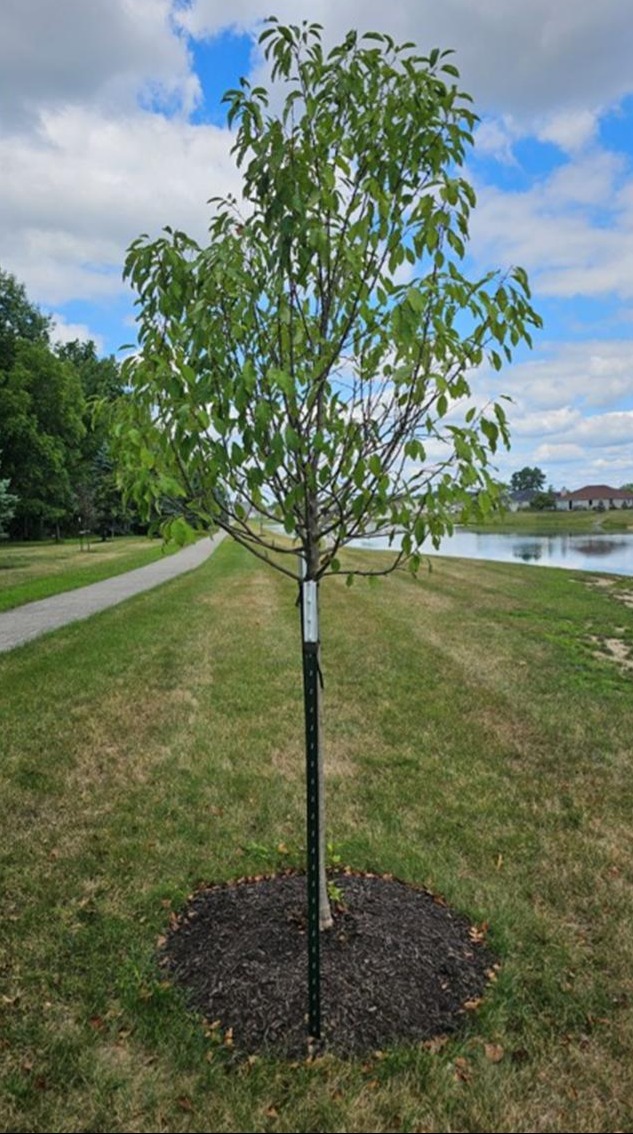 Wallen Chase Eco-Friendly Initiative Project - removed and replanted 10 new trees along community path
Grantee Payment and Reimbursement Processes
Direct Payment to Vendors that were approved in the Executed Grant Agreement
1. Neighborhood project manager please alert the Grant Administrator of the project /phase completion.
2. All vendors must have a completed W-9 on file with the City for payment.
3. Confirm the invoice is addressed to: the City of Fort Wayne, 200 East Berry St. Suite 320, Fort Wayne, IN, 46802, c/o Neighborhood Improvement Grant Administrator,
4. and the invoice does not contain sales tax. The Grant Administrator can send the vendor the City’s Tax Exemption form upon request.
5. Take photos of the completed work or arrange for the Grant Administrator to perform a site visit.
6. Send the photos of the completed work and the invoice to the Grant Administrator.
7. Once all documents have been received/verified, the payment will be processed, please allow up to 30 days for the payment to arrive via mail to the address listed on the completed W-9 form.
Reimbursement Process for items that were listed and approved in the Executed Grant Agreement
1. Neighborhood project manager please alert the Grant administrator of the project/ phase completion.
2. All organizations or individuals must have a completed W-9 on file with the City for reimbursement payment.
2. Complete a reimbursement request form (see below).
3. Provide proof of purchase for the items from the approved vendor.
4. Take photos of the completed work or arrange for the Grant Administrator to perform a site visit.
5. Once all documents have been received/verified, the reimbursement payment will be processed, please allow up to 30 days for the payment to arrive via mail to the address listed on the completed W-9 form.
Grantee Forms
2026 Improvement Grant Program Documents
Please read these documents ahead of applying for the improvement grant program.
-
 2026 Improvement Grant PolicyPDF (88.48 KB)
The Grant Policy will inform you of the minimum requirements for the program.
-
2026 Improvement Grant GuidelinesPDF (131.25 KB)
This Guideline contains the Budget and Scope of Work/ Timeline Forms needed for your application and Grant Agreement (if awarded). It also provides instruction regarding payment, permitting, property permissions, obtaining quotes/invoices, building your Budget, and writing your Scope of Work/ Timeline.
Forms on Payment and Reimbursement
-
Reimbursement Request FormPDF (25.81 KB)
This form needs to be included with all requests for reimbursement to outline the costs that the neighborhood incurred and the amount that they request to be reimbursed based on their grant. This form needs to be compiled with proof of expenditure, such as reciepts, copies of checks, bill statements, etc, including photos of the completed project.
-
W-9 FormPDF (137.51 KB)
This form must be completed for all contractors or vendors and for all neighborhoods or individuals that will be paid or reimbursed by the City.
-
Example W-9 FormPDF (300.81 KB)
This document example underscores some key elements of the application, such as parts that are optional, parts that are mandatory and elements that are often overlooked or misinterpreted.