Crime in the East Central Neighborhood
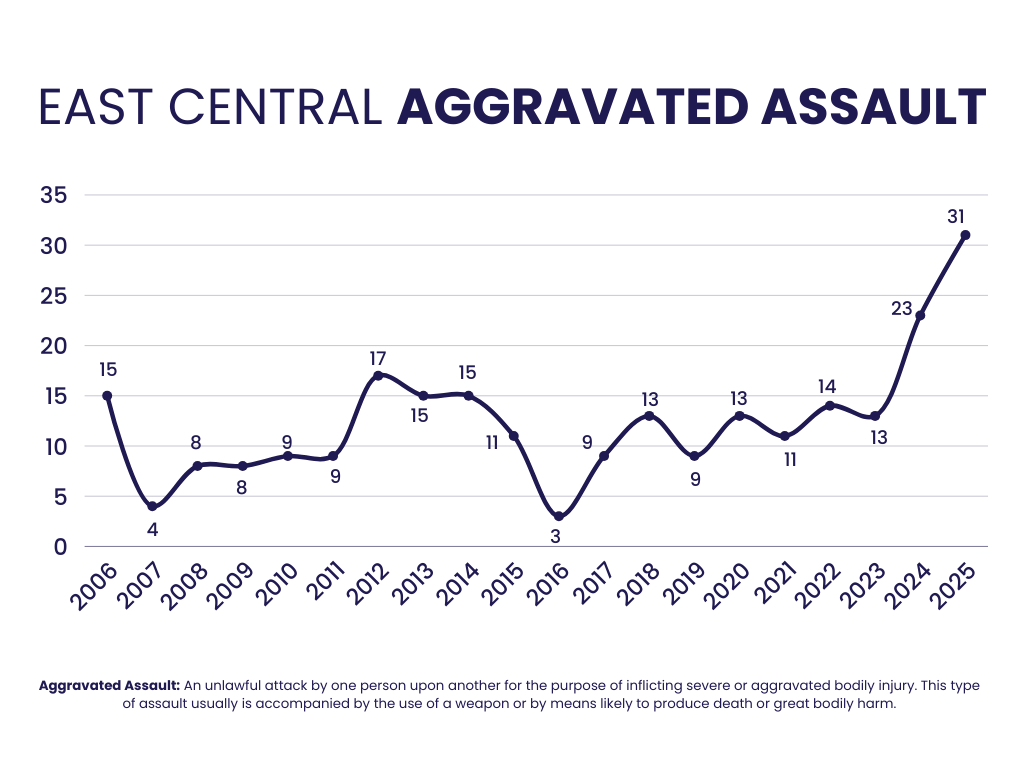
While total crime in East Central has trended modestly upward in recent years, with 2024 representing the highest annual total since 2010, the East Central Forward Neighborhood Plan is working to address these concerns through specific, proven safety investments.
The last time crime reached comparable levels was during 2012-2013, when it was also elevated across Fort Wayne as a whole. Outside the increase seen in 2024, crime patterns in East Central have generally followed a citywide trend, showing early signs of progress. As a neighborhood that prioritizes investment in safety, infrastructure, and community connection, East Central is well-positioned to build on its strengths and work collaboratively to enhance safety for its residents.
Nonviolent Crime
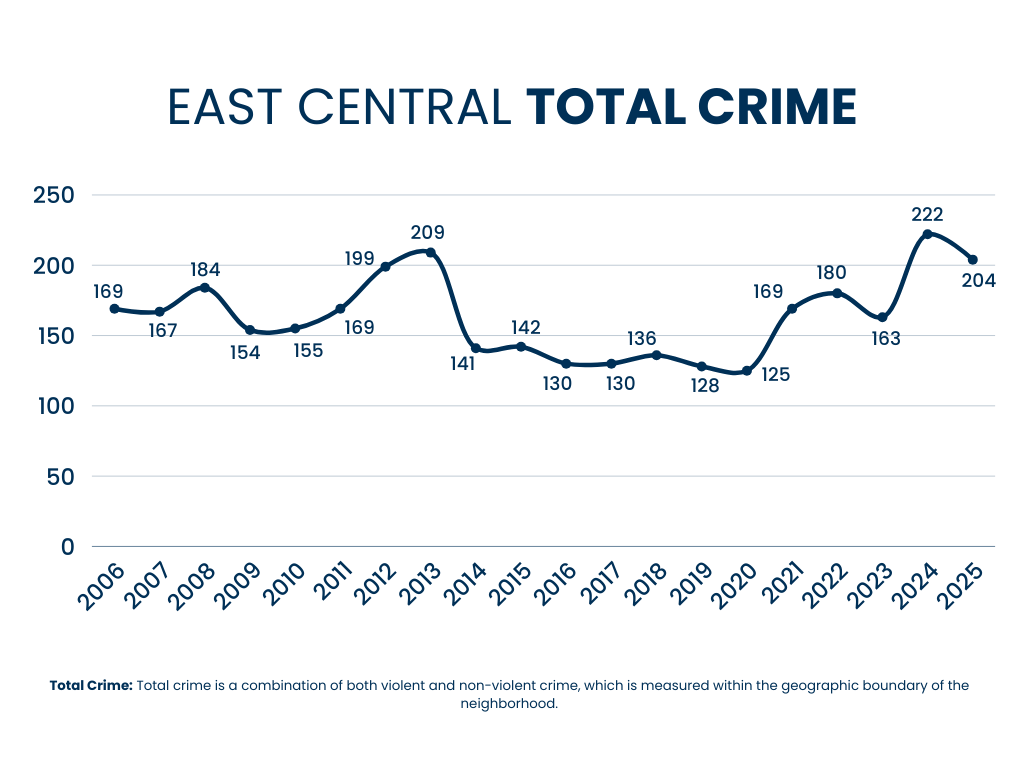
Nonviolent crime, which according to the FBI Uniform Crime Rates includes burglary, larceny, motor vehicle theft, and arson, decreased in 2025 compared to a peak in 2024.
- While Nonviolent crime increased by 27% over the post-pandemic average and by 39% over the prior 10-year average, it declined significantly in 2025.
Importantly, this increase is not spread evenly across all types of nonviolent crime that are measured. The primary driver in 2024 in the East Central Neighborhood was larceny (theft), while all other categories saw a relative decline. East Central Forward addresses this by supporting strategies that focus on reducing opportunities and increasing awareness through Crime Prevention Through Environmental Design (CPTED).
Violent Crime
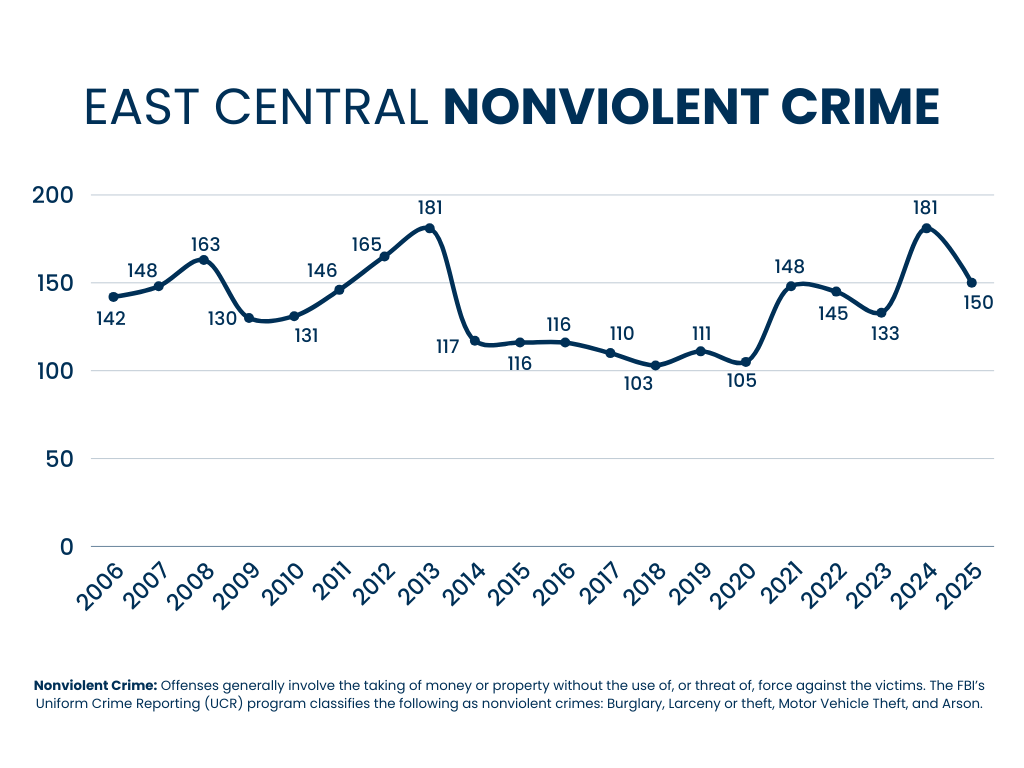
Violent Crime, which includes aggravated assault, robbery, and homicide, has fluctuated in East Central over the past two decades. From 2006 through the mid-2010s, violent crime fluctuated, with notable peaks around 2012 and 2018, followed by pronounced declines. The lowest levels occurred around 2016, when violent crime dropped to fewer than 15 total incidents.
- Beginning in 2021, and continuing through 2025, violent crime in East Central had seen a rise in total incidents, matching much of a national trend in post-pandemic socially influenced crime.
While the graph shows a stark increase, it should be noted that the change in how aggravated assaults are categorized does not affect the crime rate, which remains within the range of normal variation for the area. These trends highlight the importance of continued investment in community-based safety strategies as outlined in the East Central Forward Plan.
Burglary
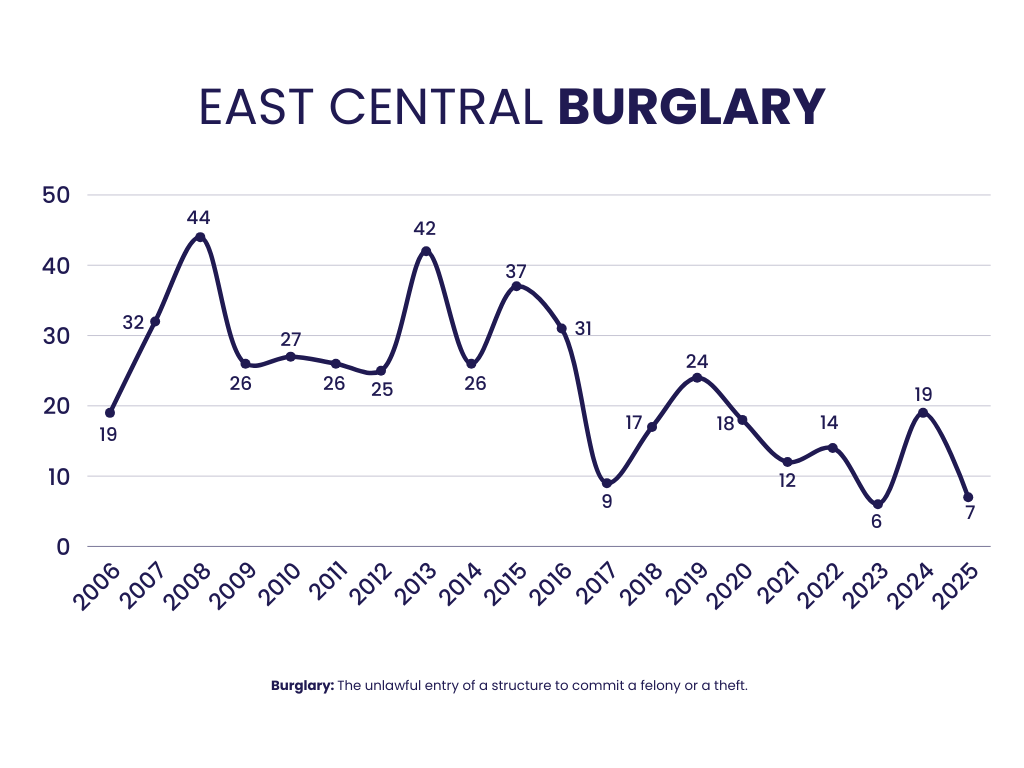
Burglary, defined as the unlawful entry of a structure to commit a felony or theft, has long been one of the crimes most closely tied to how safe residents feel in their homes and neighborhoods. In East Central, burglary was once a more common concern, but the long-term trend shows a substantial, sustained decline, with some year-to-year fluctuations.
- East Central reached a peak of 44 incidents in 2008, followed by 42 incidents in 2013
- Since this time, burglary levels have remained well below historic highs. Even with occasional increases, such as 24 incidents in 2019, by 2025, burglaries had declined to just 7, making it one of the lowest levels recorded in the past two decades.
This long-term decline reflects the positive impact of several effective neighborhood strategies as outlined in the East Central Forward plan. We're also seeing strong social connections and a stronger neighborhood presence in recent years, which help create informal systems of accountability that discourage criminal activity. While burglary remains an understandable concern for residents, East Central has made significant progress.
Larceny
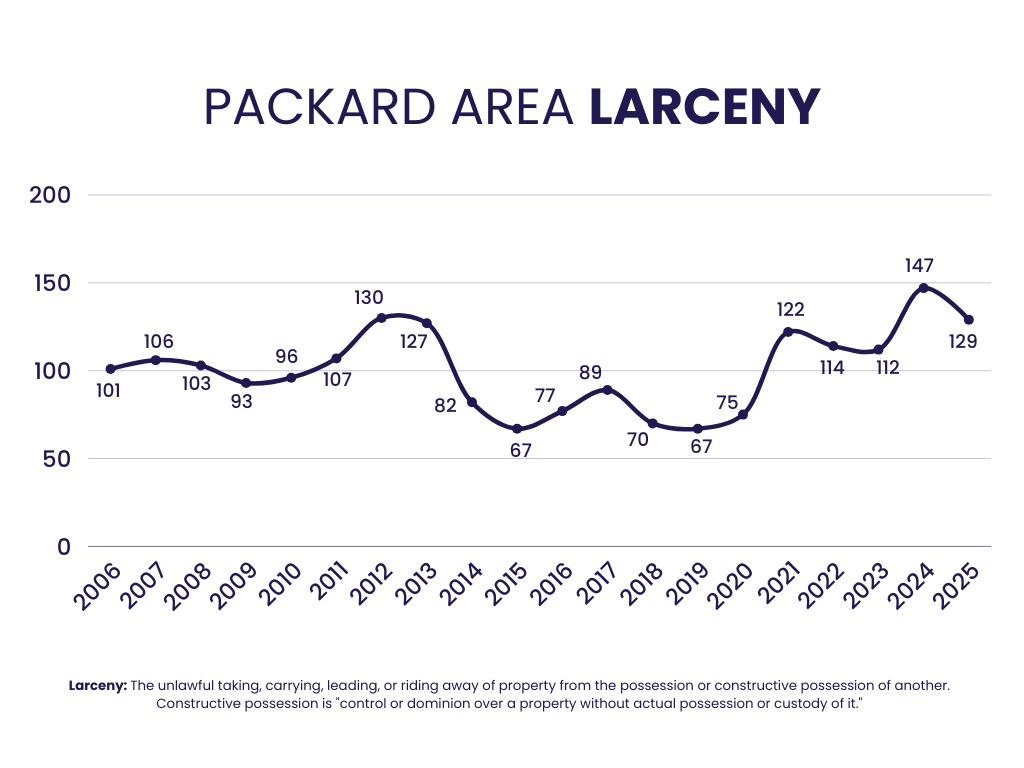
Larceny, which includes theft without force such as shoplifting, package theft, and property taken from vehicles or yards, is one of the most common types of non-violent crime in East Central. Because it often occurs in everyday spaces, such as neighborhood streets and parking areas, it can have an outsized impact on how residents feel about neighborhood safety.
- Historically, larceny levels in East Central were highest in the late 2000s and early 2010s, with peak years around 2012 (130 incidents) and 2013 (127 incidents).
- After the pandemic, larcenies began to increase again, reaching levels similar to those of earlier peak years, with a peak in 2024 (147 incidents).
The recent increase accounts for nearly all of the growth in nonviolent crime in East Central during the past few years. While the rise in larceny deserves attention, it is important to note that this type of crime is highly responsive to targeted prevention strategies. Continued efforts in Crime Prevention Through Environmental Design, along with support and growth in neighborhood connections, can help reverse increases and foster a safer community.
Robbery
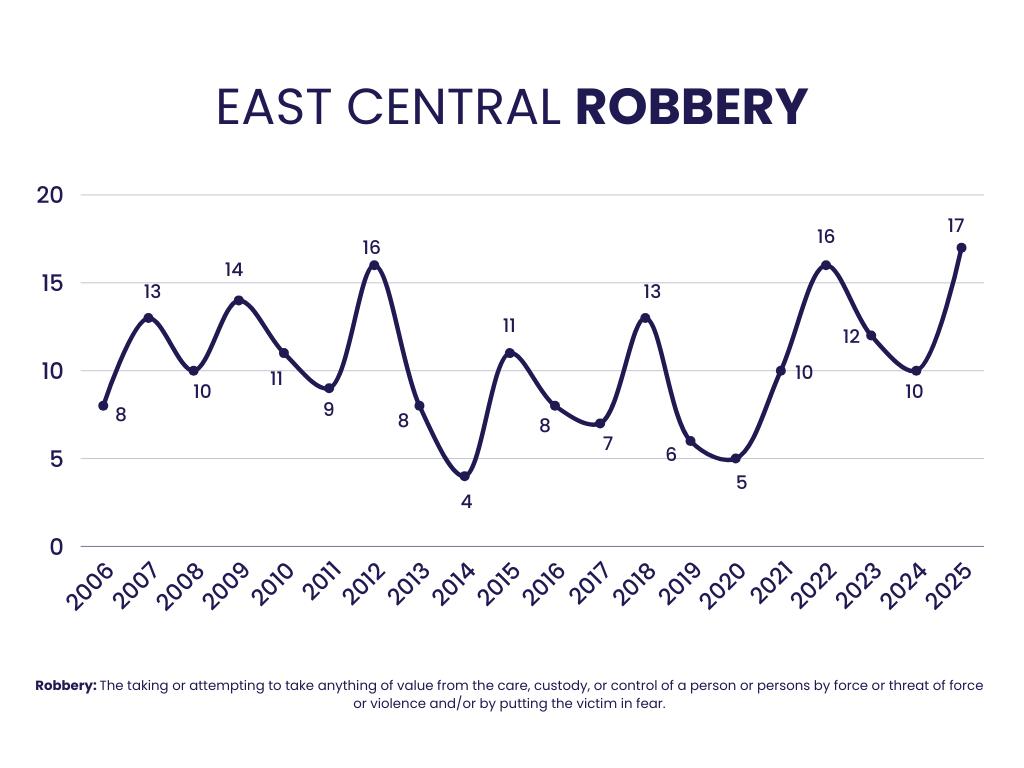
Robbery, which involves taking or attempting to take something of value from a person through force, threat, or intimidation, is one of the most personal and visible types of violent crime. This is because robbery occurs face-to-face, strongly influencing how someone might feel in their neighborhood. In East Central, robbery has remained a relatively low-crime type overall, though the trend shows periodic fluctuations.
- Robbery saw peaks of activity in 2012, 2022, and again in 2025, with approximately 16 to 17 total incidents. In 2025, this accounted for only 8% of criminal activity in the neighborhood, underscoring its rarity.
While the number of robberies remains small compared to other crime types, the trend underscores the importance of continued attention on neighborhood improvements as outlined in East Central Forward. The trends, while concerning, are not widespread in East Central, and these specific hotspots are being addressed by the Fort Wayne Police Department.
Aggravated Assault
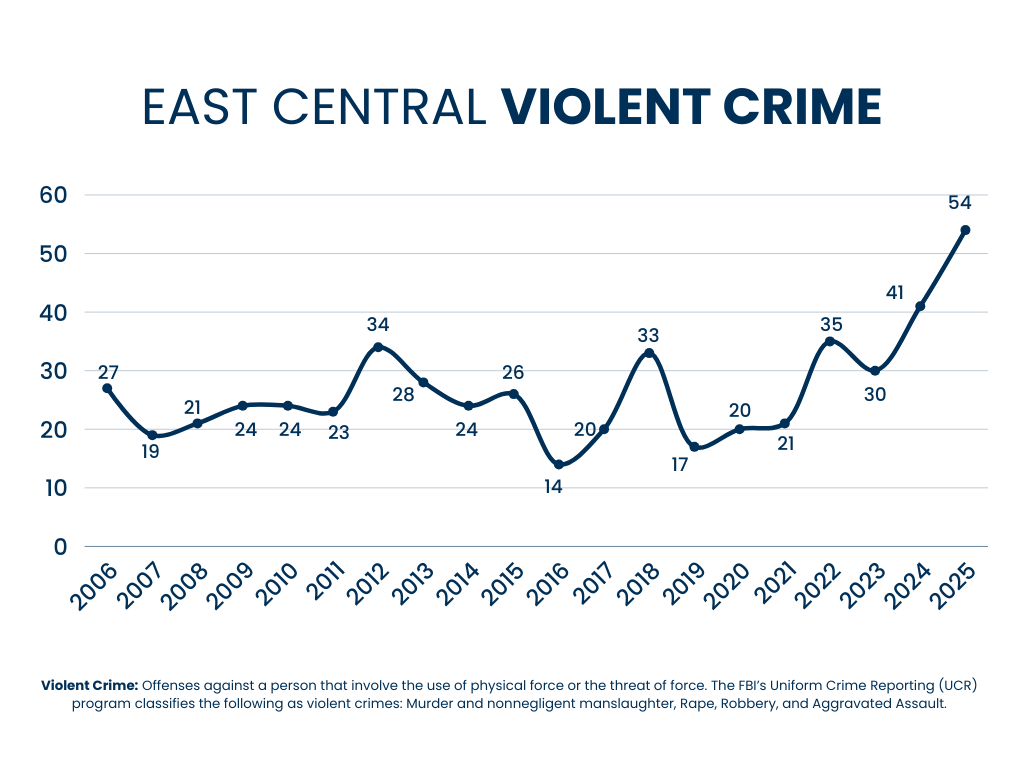
Defined as an unlawful attack intended to cause serious bodily injury, aggravated assault is one of the more serious forms of violent crime and can have a strong impact on how one feels in their surroundings. In East Central, aggravated assault levels have remained moderate over time, with year-to-year changes rather than sustained extremes.
- East Central experienced a prior peak in aggravated assault with 17 incidents in 2012, followed by a gradual decline.
- More recently, aggravated assault saw a rise starting in 2023, reaching a total of 31 incidents in 2025, the highest level shown over the past two decades.
Aggravated assault is most often driven by interpersonal factors, including mental health challenges, substance abuse, and domestic conflict. As a result, addressing the issue will require a combination of approaches, but notably, access to support services and early intervention strategies.